The Cardiac Cycle Explained (Systole & Diastole)
The cardiac cycle is the sequence of events in one heartbeat — the heart filling with blood and then pumping it out. Understanding it makes heart sounds, murmurs and ECGs click into place. Here is the cycle broken into simple stages.
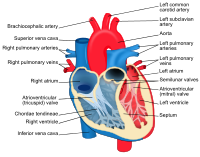
The two big phases: systole and diastole
Systole is contraction (pumping); diastole is relaxation (filling). Each chamber has its own systole and diastole, but when people say "systole" they usually mean ventricular systole — the moment the ventricles squeeze blood out to the lungs and body.
Step by step
- Atrial systole — the atria contract, topping up the ventricles with the final ~20% of blood ("atrial kick").
- Isovolumetric contraction — the ventricles begin to contract; pressure rises and the mitral and tricuspid (AV) valves snap shut. This produces the first heart sound, S1 ("lub").
- Ventricular ejection — ventricular pressure exceeds the aorta and pulmonary artery, the aortic and pulmonary valves open, and blood is ejected.
- Isovolumetric relaxation — the ventricles relax, pressure falls, and the aortic and pulmonary valves close, producing the second heart sound, S2 ("dub").
- Ventricular filling — the AV valves reopen and blood flows passively from the atria into the ventricles, ready for the next cycle.
Why the valves and heart sounds matter
The heart sounds are simply valves closing: S1 = AV valves (start of systole), S2 = aortic/pulmonary valves (start of diastole). Murmurs occur when blood flows turbulently through a narrowed (stenotic) or leaking (regurgitant) valve — and knowing when in the cycle a murmur happens tells you which valve is involved.
Linking it to the ECG
The ECG is the electrical trigger for the mechanical cycle: the P wave precedes atrial systole, the QRS precedes ventricular systole, and the T wave marks ventricular repolarisation as diastole begins.
See the diagram while you learn
Ask Aboy AI about the cardiac cycle and it explains it with a labelled diagram and cited sources — tuned to your level.
Try Aboy AI freeFrequently asked questions
What causes the first and second heart sounds?
S1 is the closure of the mitral and tricuspid (AV) valves at the start of ventricular systole; S2 is the closure of the aortic and pulmonary valves at the start of diastole.
What is the "atrial kick"?
The final active filling of the ventricles when the atria contract — it contributes roughly 20% of ventricular filling and is lost in atrial fibrillation.
This article is for education only and is not medical advice.